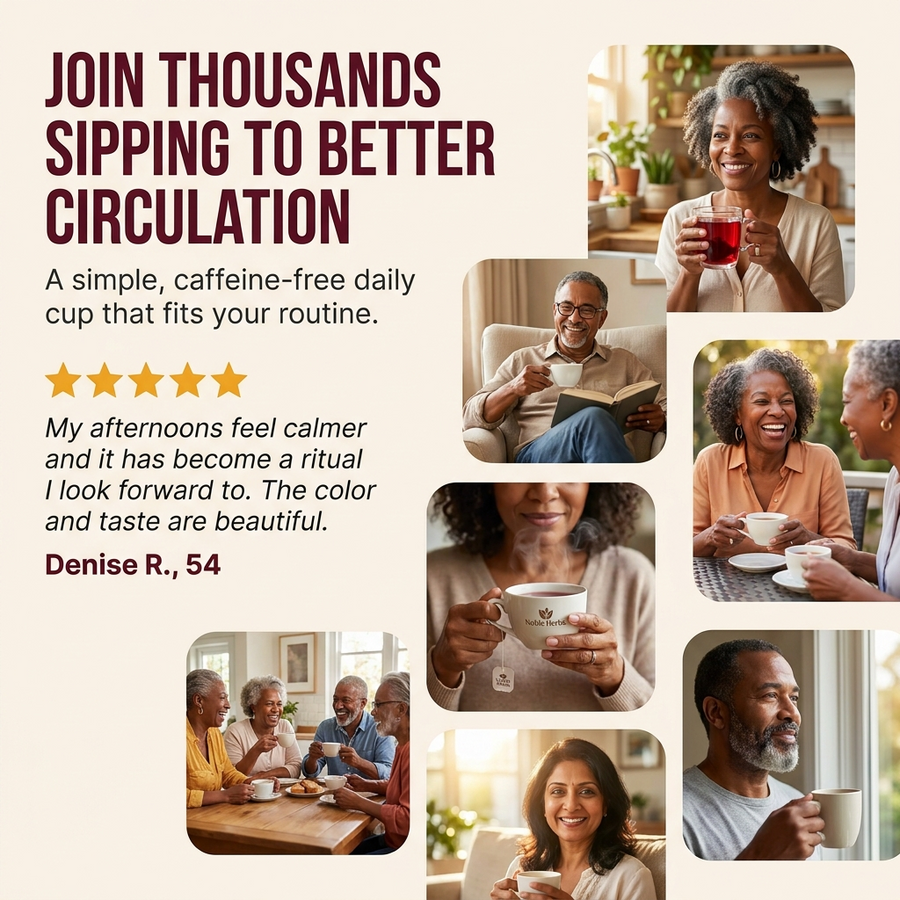
"I was not sure a tea could become a habit, but I look forward to my ruby cup every evening. It is tart and refreshing, caffeine-free, and I just feel calmer and steadier through the day. Beautiful color too."
YYvonne B. · Verified Customer
★★★★★4.8/5 based on 2648 reviews
Support Healthy Blood Pressure Naturally, Backed by Clinical Research
Noble Herbs Hibiscus Tea
Sourced from Family FarmsWhole Petal, Never Dust
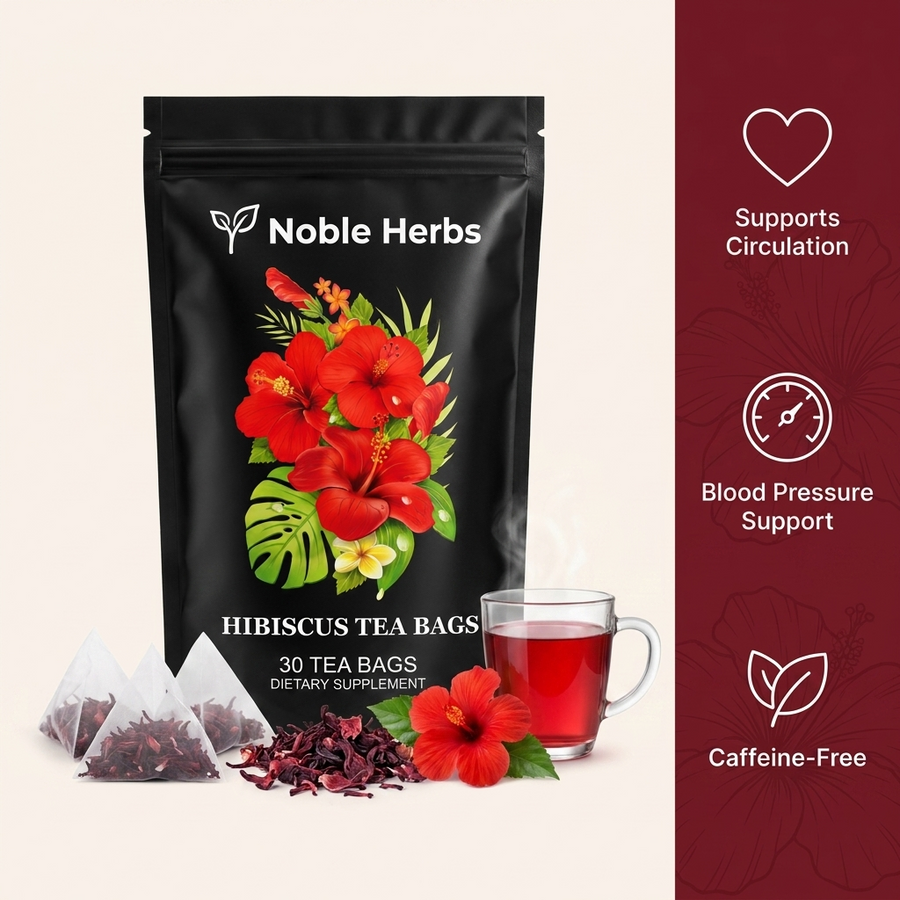
Noble Herbs Hibiscus Tea is a vibrant, caffeine-free herbal tea made from whole hibiscus petals. Brewed daily to support healthy blood flow, everyday energy, and healthy blood pressure already within a normal range.
Circulation Support*
Healthy Blood Pressure*
Everyday Energy*
Rich in Antioxidants*
Not all hibiscus tea is the same.
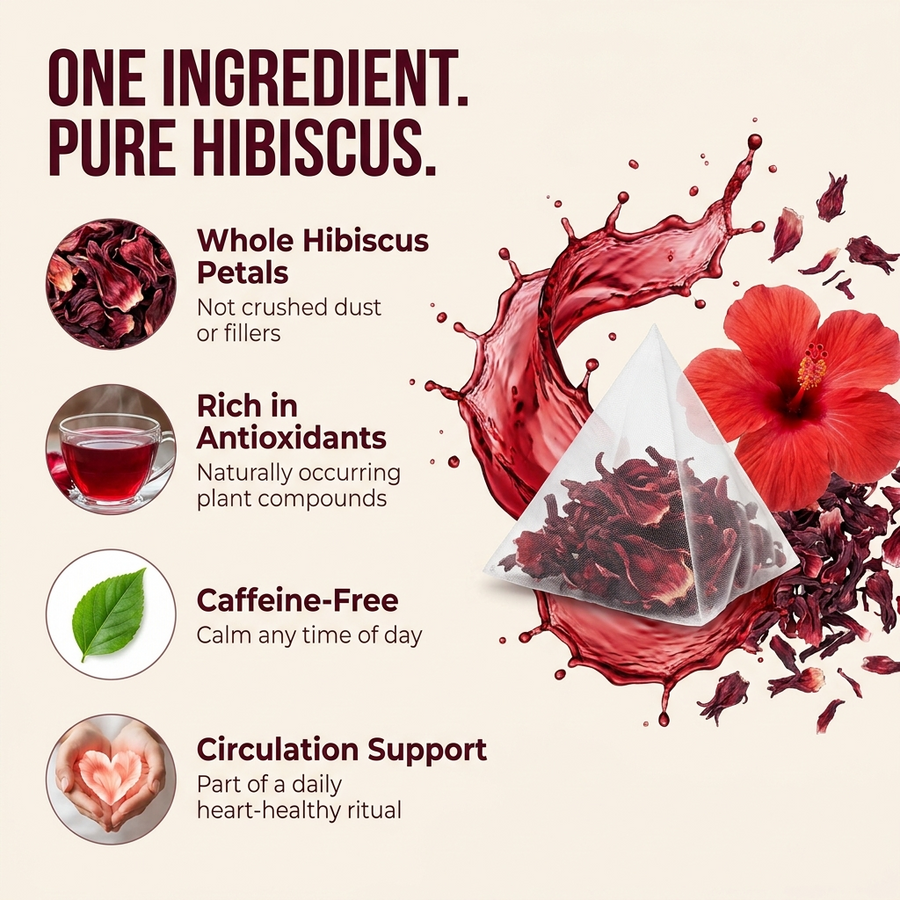
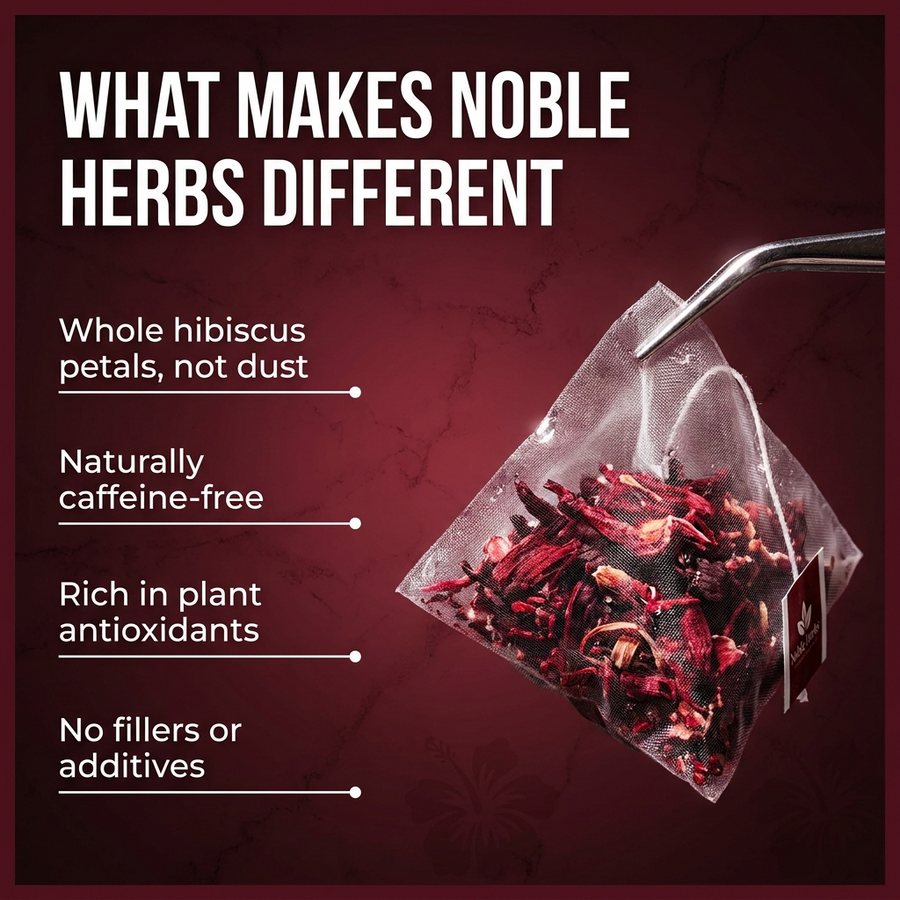
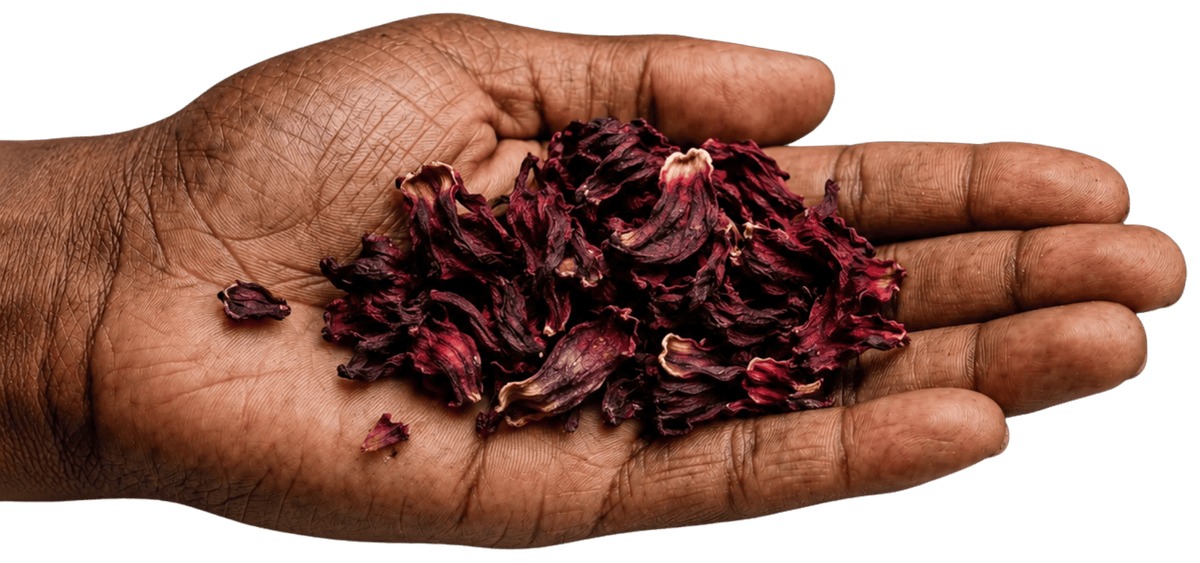
Most hibiscus on the shelf is pale, cut-and-sift dust with little of the deep-red antioxidants that make it worth drinking. Ours is whole petal, rich and ruby-red.
Choose your supply
1 Pouch
$29.95 per pouch
$29.95
$39.95
Most Popular
Buy 2, Get 1 Free
Save 50% · $19.98 per pouch
$59.95
$79.95
Buy 3, Get 2 Free
Save 55% · $17.99 per pouch
$89.95
$119.95
✓
25% Off Summer Sale
Subscribe to lock in the sale price on your pack — skip or cancel anytime.
In stock Ships by soon
VISAAMEXPayPal PayG Payshop
60 DAY
Try it risk free for 60 days
If you do not feel the difference, contact us for a full refund. No hassle.
How does it taste? +
Bright and tart, a little like cranberry with a floral note, and a beautiful deep ruby-red color. It is naturally caffeine-free, so you can enjoy it any time of day, hot or iced. Add a touch of honey if you like it sweeter, though most people love it just as it is.
How soon will I notice something? +
It varies from person to person, but many people feel calmer, steadier energy within the first few weeks of drinking it every day. Hibiscus works best with consistency, and you are covered by our 60-day money-back guarantee if you do not feel the difference.
How many cups a day? +
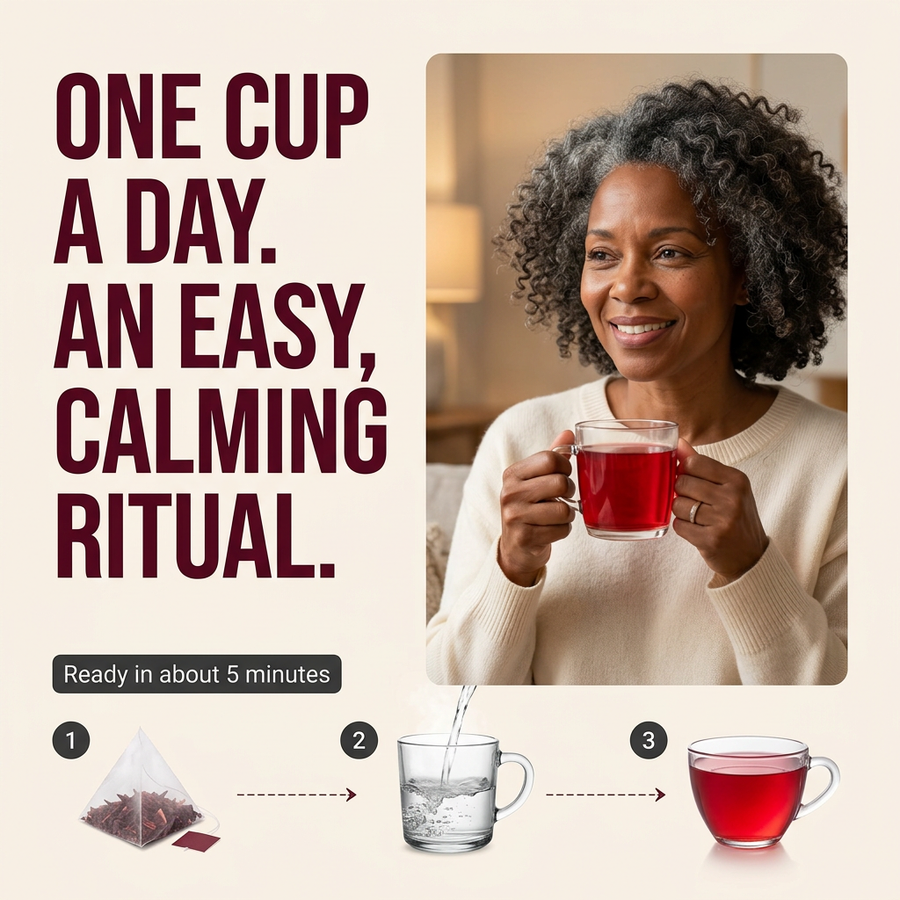
One to three cups a day. Steep one tea bag in hot water for about five minutes. Most people start with one and work up, and if you can get to three, get to three. Three cups a day for six weeks is what the randomized, double-blind, placebo-controlled trial at Tufts University had its participants drink.
Can I drink it with my medication? +
If you take medication or manage a health condition, please check with your healthcare provider first. It is always the safest way to start something new.
What is your return policy? +
Every order is backed by a 60-day money-back guarantee. If it is not for you, contact us for a full refund, even on an opened pouch. No hassle.
★★★★★
"I was not sure a tea could become a habit, but I look forward to my ruby cup every evening. It is tart and refreshing, caffeine-free, and I just feel calmer and steadier through the day. Beautiful color too."
YYvonne B. · Verified Customer
Not all hibiscus is created equal
Here is what most hibiscus brands will not tell you:
Hibiscus only does its work when it carries enough anthocyanins, the deep-ruby antioxidants behind the color. Those are the compounds researchers tie to nitric oxide, the molecule your body makes to keep blood vessels relaxed and open. Less color means less of them, which is why the shade of the cup is not a cosmetic detail.
The problem? Most hibiscus tea on the shelf is virtually useless.
Faded supermarket hibiscus blends
Baseline
Standard mass-market hibiscus tea
2 to 3x baseline
Mid-grade single-source hibiscus
4 to 6x baseline
Noble Herbs Hibiscus (Northern Nigeria)
Top of the scale
Anthocyanin grade is the industry measure of hibiscus quality. The ranges above reflect published grading tiers for dried hibiscus rather than a head-to-head test of named brands.
Left: our whole hibiscus petals. Right: the pale, machine-cut hibiscus that fills most tea bags.
Why Northern Nigerian hibiscus runs deeper
Same flower. Different region. Different cup.
Intense Sahel sun
Hard sun pushes the plant to build more anthocyanins as UV defense.
Iron-rich savanna soil
Mineral-dense red earth grows denser, deeper-coloured calyces.
Traditional sun-drying
Dried in open air, never forced through heated dryers.
We buy only from family farms in Northern Nigeria, where the deep-ruby zobo tradition has been handed down for generations.
Blood pressure hits Black adults hardest
Black adults in the United States develop high blood pressure earlier in life, and at higher rates, than any other group in the country. That is not something you caused. It is a reason to start paying attention to your circulation early, while your numbers are still where you want them.
58%
of Black adults
in the United States are living with high blood pressure, the highest rate of any group in the country.
10%
a year, after 40
is how fast the body's nitric oxide can decline, the molecule that keeps blood vessels relaxed and open.
Sources: American Heart Association; Centers for Disease Control and Prevention.
The good news
You can support your circulation, starting today
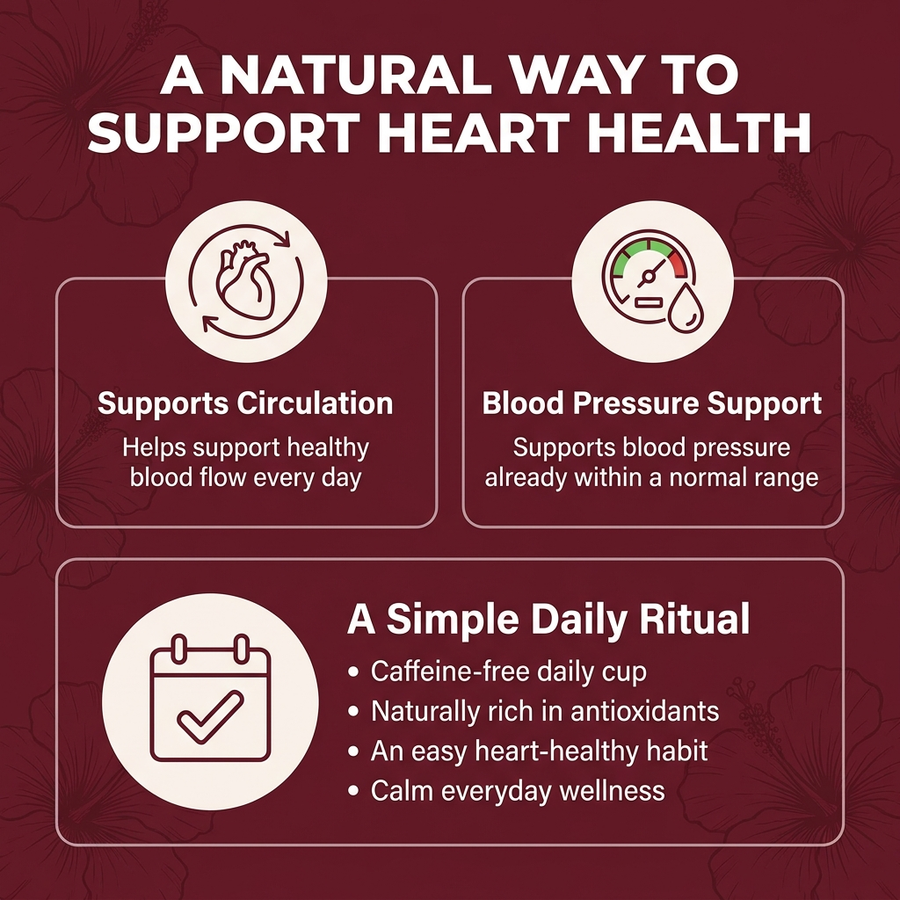
One to three cups a day, and three is the number the research used, each brewed into a vibrant ruby cup from whole hibiscus petals. Simple, caffeine-free support for the things that get harder as circulation slows: healthy blood flow, everyday energy, and healthy blood pressure already within a normal range.
Supports Healthy Blood Flow
Supports Daily Energy
Rich in Antioxidants
Cardiovascular Wellness
One ingredient. Maximum potency.
One flower, and a long list of things inside it. Hibiscus gets its deep ruby-red color from anthocyanins, the same family of antioxidants found in berries, and that color is a sign of what is working underneath. Here is what is actually in the cup.
Anthocyanins
The deep-ruby antioxidants behind the color. They are what researchers keep coming back to when they study hibiscus, blood vessels, and healthy circulation, and hibiscus is one of the richest food sources of them there is.
ACE-pathway compounds
Laboratory research has looked at how hibiscus compounds interact with the same enzyme pathway your body uses to set the tension in your blood vessels. It is a gentle, food-level interaction, and part of why hibiscus keeps turning up in circulation research.
Polyphenols and flavonoids
The wider family of plant antioxidants that come along with the anthocyanins. They support metabolic function and help protect your cells against the everyday oxidative stress of modern life.
Vitamin C
Supports collagen production, immune function, blood vessel integrity, and skin health. It occurs naturally in the hibiscus calyx itself, so there is no synthetic ascorbic acid added.
Zero caffeine. Zero sugar. Zero calories.
One to three tea bags a day, each steeped for about five minutes into a vibrant ruby cup, so all of this happens the simple, natural way.
Just one ingredient
Pure whole-petal hibiscus. No fillers, no caffeine, nothing else.
Supplement Facts
Serving size 1 tea bag · 30 servings per container
Hibiscus Flower (Hibiscus sabdariffa)2,000 mg
Whole hibiscus petals. Caffeine-free. No fillers, binders, or additives.
How does it taste?
Bright, tart, and refreshing, a little like cranberry with a floral edge. Naturally caffeine-free, hibiscus brews a deep ruby-red cup you can enjoy hot or iced. Add a little honey if you like it sweeter, though most people love it just as it is.
Hibiscus works best over time
Week 1-2
Build the habit
Start with one cup a day and work up toward three. These first weeks are about making it a routine you look forward to.
✓ Steadier daily energy
✓ Less of that sluggish feeling
Week 3-4
Stay consistent
Aim for three by now: one with breakfast, one in the afternoon, one after dinner. That is the rhythm the research used.
✓ A calm, steady kind of energy
✓ Fewer afternoon dips
Week 5-8
Settle in
The daily ritual feels automatic now, and the benefits keep building.
✓ Steadier stamina
✓ Clearer, sharper days
Week 9-12+
Long-term support
It rewards consistency. Most people simply keep it in their daily routine.
✓ Sustained energy
✓ Everyday circulation support
Why folks keep coming back to Hibiscus Tea
★★★★★ Rated 4.8 out of 5 by 2,648 customers
★★★★★
"I'ma keep it real, I've tried all kinds of stuff and figured tea wasn't gonna do much. But I actually look forward to my cup now, and a few weeks in I just feel better, more even through the day. Glad I gave it a shot."
Marcus T.
Verified Buyer
★★★★★
"I was worried it would taste like grass. Nope. It's tart and refreshing, kind of like cranberry, and that deep red color is beautiful. It's my little moment every evening now."
Grace A.
Verified Buyer
★★★★★
"I had to cut back on coffee, my heart would race. This gives me something warm to sip without the caffeine, no jitters at all, and I sleep better for it."
Reggie M.
Verified Buyer
★★★★★
"By two o'clock I used to crash hard. Now I brew a cup instead of another coffee and my energy stays even the rest of the day. No crash, no wired feeling."
Yolanda P.
Verified Buyer
★★★★★
"My numbers are something I keep an eye on. Having something simple I drink through the day that supports healthy blood pressure already in a normal range gives me a little peace of mind. And it tastes good too."
Frank D.
Verified Buyer
★★★★★
"So easy, one bag, hot water, five minutes. I stuck with it like they said and by week three it just felt like part of my day. Give it time, don't quit early, that's my advice."
Sandra K.
Verified Buyer
★★★★★
"I wasn't tryna add another thing to my cart. But my wife and I both drink it now, and for what it costs it's worth every penny. We just reorder before we run out."
Warren H.
Verified Buyer
Frequently asked questions
How does it taste?
Bright and tart, a little like cranberry with a floral note, and a beautiful deep ruby-red color. It is naturally caffeine-free, so you can drink it any time of day, hot or iced. A little honey makes it sweeter if you prefer, but most people love it as it is.
What is Hibiscus Tea?
Hibiscus Tea is a daily herbal tea made from whole hibiscus petals (Hibiscus sabdariffa), rich in the deep-red antioxidants called anthocyanins. It is caffeine-free and made to support healthy circulation, everyday energy, and healthy blood pressure already within a normal range.
Who is it for?
It is made for anyone who wants a simple daily habit that supports healthy circulation and blood pressure already in a normal range, or who just wants a caffeine-free cup that tastes good and does something good for them.
What does it help support?
It supports healthy blood flow, steady everyday energy, healthy blood pressure already within a normal range, and your body's everyday antioxidant defenses.
Is there real research behind hibiscus?
Yes. Hibiscus sabdariffa is one of the more heavily studied herbal teas, and the most relevant trial is the one that used brewed tea bags rather than an extract: a randomized, double-blind, placebo-controlled study run at Tufts University, published by McKay and colleagues in the Journal of Nutrition in 2010, in which participants drank three cups a day for six weeks. That is why we say three. In one randomized crossover study, researchers measured how participants' blood vessels responded after a single serving and saw a significant improvement within two hours. These studies were carried out on hibiscus as a plant rather than on this finished product, and are shared for education only.
How does hibiscus support circulation?
It comes back to nitric oxide, the molecule your body makes to keep blood vessels relaxed and open so blood moves freely. Natural production of it can fall by around 10 percent a year after 40, which is part of why circulation feels different with age. The anthocyanins that give hibiscus its deep ruby color are the compounds researchers connect to healthy vessel function, which is how a simple daily habit supports healthy blood flow and blood pressure already within a normal range.
How do I brew it?
Steep one tea bag in freshly boiled water for about five minutes, a little longer if you like it stronger. Enjoy it hot, or let it cool and pour it over ice. One to three cups a day, and three is the target, because three cups a day for six weeks is what the Tufts trial used.
How soon will I notice something?
It varies from person to person. Some feel calmer, steadier energy within the first couple of weeks, and for others it takes a little longer. Hibiscus rewards consistency, so one to three cups a day, with three as the target, is the way to go. Either way, you are covered by our 60-day money-back guarantee.
Does it have caffeine?
No. Hibiscus is naturally caffeine-free, so you can enjoy a cup in the afternoon or evening without it keeping you up at night.
Can I drink it with my medication?
If you take medication or manage a health condition, please check with your healthcare provider before adding any new herbal tea. It is always the safest way to begin.
How many tea bags are in a pouch?
Each pouch has 30 pyramid tea bags. How long that lasts is up to you: 30 days at one cup a day, ten days at three. If you are going for three cups a day, Buy 2, Get 1 Free is the one that keeps you covered.
Where is it sourced from?
Our hibiscus is whole-petal and carefully sourced, and every batch is checked for quality and color before it is packed.
What is your return policy?
Every order is backed by our 60-day money-back guarantee. If you do not love it, contact us for a full refund, even on an opened pouch. No forms, no hassle.
How long does shipping take?
Most orders arrive within 8 to 12 days. We process your order quickly and email your tracking as soon as it ships so you can follow it the whole way.